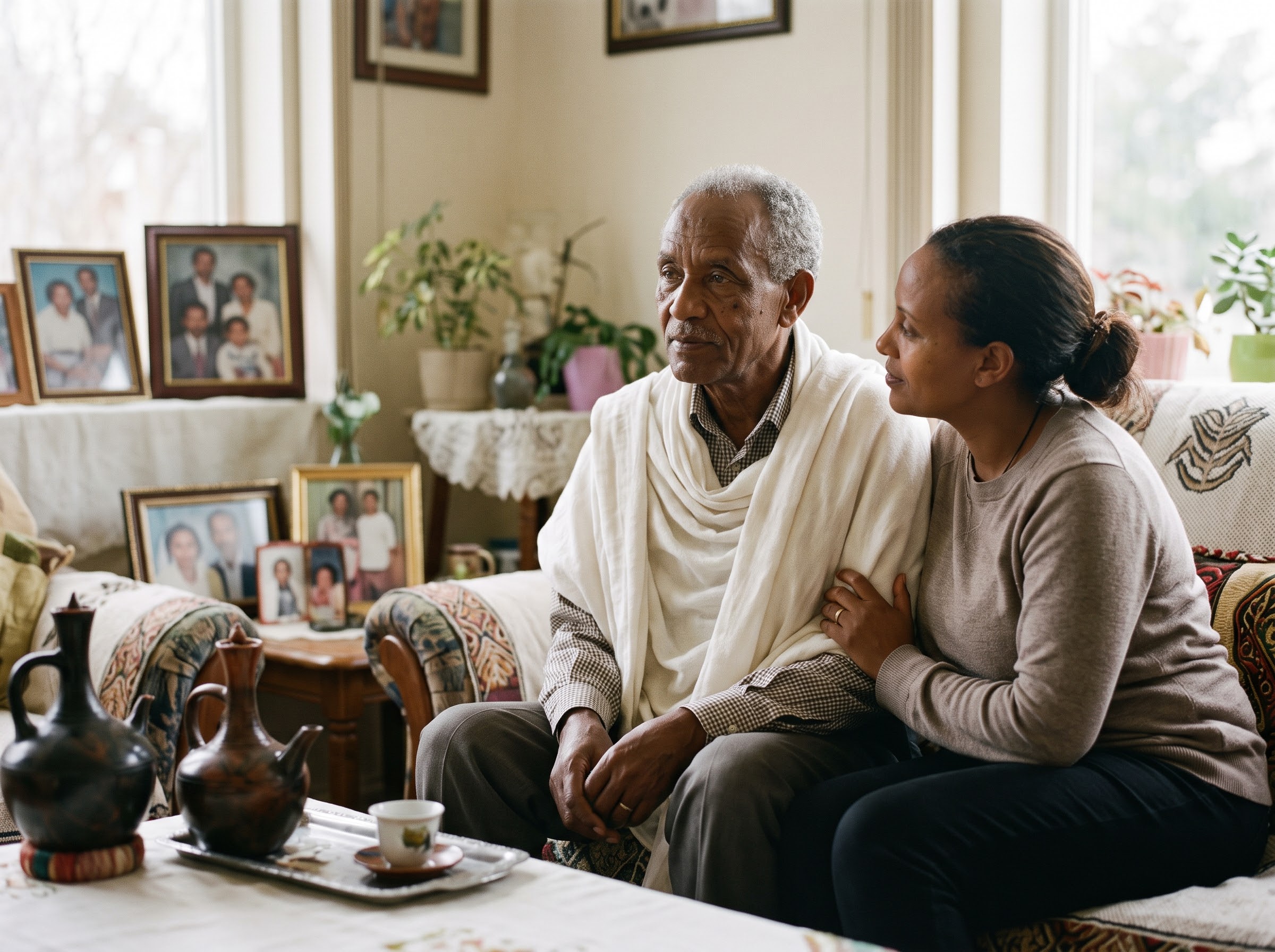
 “Behind the Forgetfulness is Still a Father”: The Heart of Dementia Care
“My father suddenly stares at me and doesn't respond when I talk to him.”
These are the words of Seble, one of our many clients caring for a loved one with dementia. She has been by the side of her 79-year-old father since his diagnosis three years ago.
For Seble, dementia is not simply about forgetting names, places, or things. It is about watching her father change, while trying to protect the person he has always been.
“I can't talk about his diagnosis openly,” she says.
It is not because she does not understand his condition. Rather, she is afraid that openly discussing the diagnosis might make him feel incapable or make him lose hope.
“Life is already depressing for him, so I want him to do whatever he wants,” she explains.
This has shaped the way she cares for him. Instead of constantly reminding him about what he can no longer do, she tries to give him the freedom to make choices and continue doing the things he enjoys.
But dementia has also changed his confidence.
“Dementia makes him anxious. He can't go anywhere without holding my hand. He has no confidence.”
The man who once moved through life independently now sometimes needs someone beside him just to feel safe. For Seble, these moments are difficult because she is not only witnessing memory loss, but also the gradual loss of confidence and independence.
Dementia is an umbrella term for conditions that affect memory, thinking, behaviour, and the ability to carry out everyday activities. It is a rapidly growing global health challenge. According to the World Health Organization, over 55 million people worldwide are currently living with dementia, with nearly 10 million new cases emerging every single year. Although it becomes more common with age, dementia is not a normal part of ageing. As the condition progresses, people may experience difficulties with communication, movement, decision-making, and independence.
Yet for families like Seble's, the diagnosis is about much more than symptoms or statistics.
It can change the relationship between a parent and child. A daughter becomes a caregiver. A father becomes dependent on the daughter who once depended on him. And sometimes, families find themselves grieving changes in a loved one while that person is still sitting right in front of them.
For Seble, keeping her father's dignity intact is part of caring for him. She has chosen not to repeatedly emphasize what he has lost, but to focus on what he can still do.
Perhaps that is one of the most important lessons of dementia care: a diagnosis should not become a person's identity. Behind the forgetfulness is still a father. Behind the confusion is still a person with preferences, feelings, and dignity. And sometimes, caring means holding his hand when he is afraid, giving him space when he wants independence, and quietly being there when he no longer knows how to reach back.
Because even when a familiar face becomes unfamiliar, the need for love, patience, and dignity remains.
Related Blogs

Ethiopia Is Investing in Yesterday's Healthcare
The healthcare system Ethiopia is building today may be obsolete tomorrow.Having a strong healthcare system is an important indicator of a country...

Inside Lifeline Addis: A Conversation with Biniyam
Inside Lifeline Addis: A Conversation with BiniyamToday, we are sitting down with Biniyam Girma (health officer) to hear about his journey at Lifeline...