 Inside Lifeline Addis: A Conversation with Biniyam (Health officer)
Inside Lifeline Addis: A Conversation with Biniyam
Inside Lifeline Addis: A Conversation with Biniyam
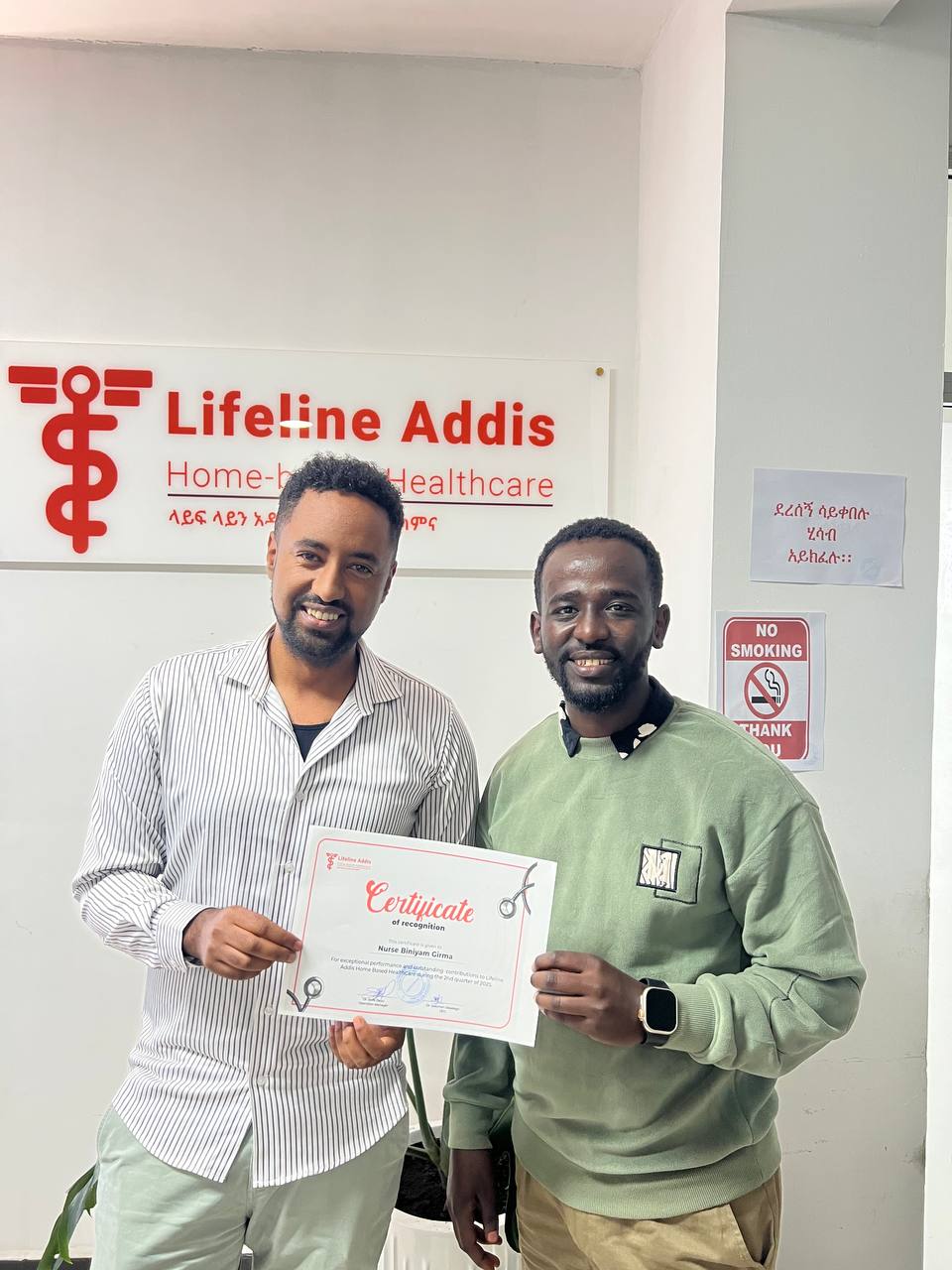
Today, we are sitting down with Biniyam Girma (health officer) to hear about his journey at Lifeline Addis—from his days on the ground as a dedicated nurse, earning the Best Nurse of the Quarter award, to evolving into his current role as a supervisor and quality assurance professional.
Lifeline Addis: Looking back at your two years with Lifeline, how did your journey in home-based care begin, and how has it changed your perspective?
Biniyam: When I first started, I brought that classic hospital mindset—walking in focused purely on treating the illness. But home-based care completely flips that script. No two homes are ever the same. You can walk into a house expecting one thing, and find that the patient's space, family dynamics, and daily realities completely dictate what care actually looks like. It forces you to adapt, to listen, and to just sit down and talk with the family before you even open a medical kit. It completely changed how I see healthcare: it's not just about diseases; it's entirely about people.
Lifeline Addis: What has been your most rewarding experience or a small improvement that meant a lot to you?
Biniyam: In home care, success doesn't always look like a dramatic hospital discharge. Often, it's found in the quiet, gradual shifts. We work with patients who need continuous support. Sometimes an improvement looks small to an outsider—a patient finally getting comfortable in their favorite chair, eating a proper meal after struggling for days, communicating with a bit more confidence, or managing an activity that felt impossible last week. For the patient and family, that means the world.
And on the flip side, seeing the nurses I supervise grow is huge. When I give feedback or training and later see a nurse apply it correctly in a home environment, I feel that impact multiply. It’s not just helping one patient; it’s elevating the standard of care across many households.
Lifeline Addis: What do people most commonly misunderstand about home-based healthcare?
Biniyam: A lot of people imagine home care as just dropping off pills or changing a basic dressing—like it's a quick, transactional errand. But it is so much more immersive than that. A patient's home is completely different from a clinical ward. The nurse has to work with whatever resources are available in that specific house while keeping everything safe and sterile. You become part of that household's daily rhythm. It takes clinical knowledge, sure, but it takes an incredible amount of patience, problem-solving, and emotional intelligence. Sometimes, the most important thing you can do isn't a medical procedure; it's simply reassuring a worried family member who is doing their best to care for their loved one.
Lifeline Addis: What are the biggest challenges you face when working across so many different homes?
Biniyam: The lack of uniformity is tough. Every single home presents a brand-new puzzle. You might deal with limited resources, tricky family dynamics, environmental safety issues, or a patient whose condition shifts suddenly. In a hospital, doctors are right down the hall; in a home, the nurse has to stay calm, assess accurately, and know exactly when to call for backup. From a quality assurance and supervision standpoint, the challenge is maintaining that same high standard across dozens of completely different environments. That’s why regular supervision, clear documentation, and continuous training are so vital.
Lifeline Addis: What has supervising and training nurses taught you about leadership and care quality?
Biniyam: Supervision should never be about hovering over people to find faults or place blame. For me, it's about partnership.When I train our nurses on things like medication safety, preventing pressure injuries, or pain management, I try to connect it directly to the exact situations they’ll face tomorrow morning in a real living room.
I always tell our team: Do not only care for the patient's illness; care for the person. Listen before you act. Notice the small changes in mood or comfort. Communicate respectfully with the family. Never ignore a safety concern. And if you're unsure, always ask for help. Clinical skills are essential, but in home care, compassion and communication are what truly bridge the gap.
Lifeline Addis: Where do you see Lifeline in five years, and what do you hope it becomes?
Biniyam: I hope to see Lifeline grow into a stronger, deeply trusted pillar of healthcare in Ethiopia—known not just for the care we provide, but for setting the gold standard of professionalism in home-based services. I’d love to see us expand our reach, use technology more effectively, and keep strengthening our nurse training. Most importantly, I hope we build a culture where quality is everyone’s responsibility—from the nurse at the bedside to the team coordinating behind the scenes.
Lifeline Addis: If you could leave one final thought with our readers, what would it be?
Biniyam: For me, Lifeline is much more than a workplace. It’s been an incredible chapter of professional growth. Every patient I’ve met, every nurse I’ve mentored, and every challenge we’ve navigated together has taught me something invaluable. My goal is simple: keep learning, keep improving, and help make compassionate healthcare more accessible to people right where they want to be—in their own homes.